




 Share
Furnishing a small, narrow, and long bathroom requires special attention to the layout of the spaces and the choice of coverings. A very elongated rectangular layout can accentuate the feeling of a cramped room, especially when the width is limited and the furnishings are arranged along the walls.
In addition to the arrangement of fixtures and furniture, porcelain stoneware and ceramic floors and wall coverings can help enhance the room’s proportions.
From the choice of tiles to the design of the shower area, there are several solutions to transform a rectangular bathroom into a harmonious and personalized space.
How to Organize Space in a Small Rectangular Bathroom
The first aspect to consider is the relationship between length and width. A particularly elongated layout can make it difficult to arrange the elements, especially if you need to maintain a comfortable passage.
One option is to place the sink, fixtures, and furniture along the same wall, while wall-hung or shallow solutions can help visually lighten the overall effect.
The distribution of elements naturally depends on the actual dimensions, the position of doors and windows, and the features of the room. In any configuration, though, it is also important to consider the role of surfaces: a continuous floor, coordinated wall coverings, and a balanced color palette can support the arrangement of furnishings, making the overall perception of the bathroom more harmonious.
Making a Narrow and Long Bathroom Look Bigger with the Right Wall Coverings
The choice of tiles can help change the perception of proportions, creating a greater sense of spaciousness and softening the corridor effect typical of very elongated spaces.
One possibility is to seek continuity between the floor and walls, using coordinated coverings for color, texture, or material effect. Stone, concrete, or wood-effect porcelain stoneware surfaces, for example, allow you to create homogeneous compositions where floors and wall coverings interact through similar tones and finishes.
An alternative is to emphasize a specific surface. The back wall of a rectangular bathroom can become a focal point thanks to a covering with a different color, a three-dimensional texture, or a decorative pattern.
It is not necessary, therefore, to cover every surface in the same way. Balance can be created by continuity as well as by a well-calibrated contrast, depending on the size of the bathroom, the available light, and the desired style.


Which Tile Format to Choose for a Narrow and Long Bathroom?
There is no universally best tile size for a narrow and long bathroom; the choice depends on the proportions of the room, the size of the surfaces to be covered, and the aesthetic effect you want to achieve.
Large-format tiles are an interesting solution for those seeking visual continuity. Small-format tiles, on the other hand, offer different decorative possibilities. Square, rectangular, mosaic, and geometric compositions can introduce rhythm and movement, especially when used to highlight a section of wall, the sink area, or inside the shower.


Which Direction Should Tiles Be Laid in a Narrow and Long Bathroom?
The orientation of rectangular tiles is another aspect to consider for enhancing an elongated bathroom layout.
On the floor, a longitudinal layout, with the longer side of the tiles parallel to the length of the room, tends to follow the development of the space, emphasizing its depth. A transverse layout, on the other hand, introduces lines crossing the width of the room and can help to visually rebalance its proportions.
However, these are not rigid rules: the result depends on the relationship between tile size, grout line direction, and the proportions of the wall. Running bond or herringbone layouts can also be interesting to introduce movement and define specific areas of the bathroom.
Narrow and Long Bathroom: Enhancing the Shower Area with Tiles
In a narrow, rectangular bathroom, the choice of shower tiles is especially important because it allows you to integrate this area into the overall design.
When the room layout allows, placing the shower on the short side can be a functional solution to take advantage of the room’s depth. The covering on the end wall then becomes an opportunity to characterize the space with colors, textures, and ceramic formats.
For a minimalist result, you can choose to maintain chromatic and material continuity between the bathroom walls and the shower walls, using coordinated surfaces. This solution helps reduce visual separation and creates a harmonious whole.
Those who prefer a more decorative effect can differentiate the shower covering with colored tiles, small formats, mosaics, or three-dimensional surfaces.
Ceramic tiles also offer the possibility to tile niches and small recesses integrated into the shower walls, turning functional elements into decorative details.
From a technical perspective, it’s important to distinguish between vertical coverings and walkable surfaces: for the shower floor, you must select products specifically suitable for this purpose, considering slip resistance and usage conditions.


Ideas for Ceramic Floors and Wall Coverings in a Modern Narrow and Long Bathroom
A small rectangular bathroom does not necessarily need to rely on neutral surfaces and minimal decoration. Even in a few square meters, you can experiment with combinations of material effects, colors, and geometric patterns, choosing coverings based on the proportions and the atmosphere you want to create.
From porcelain stoneware inspired by natural materials to cement tiles and decorative ceramics, there are numerous possibilities to interpret the same space in different styles.
Material Effects, Colors, and Decorative Tiles to Personalize a Rectangular Bathroom
Light and neutral tones, such as white, beige, greige, and grey, are particularly suitable for those who want a bright and visually airy room. For a contemporary and essential result, you can choose stone-effect porcelain stoneware or concrete-effect tiles, whose material textures add depth to surfaces without necessarily relying on strong color contrasts.
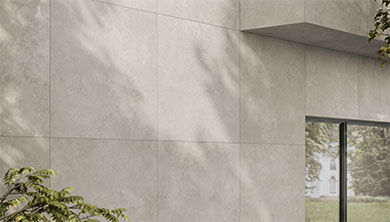
An example is the Eterna collection, which interprets the look of stone through natural shades and different formats, offering design solutions suitable for contemporary spaces.
For those who want a warmer and cozier atmosphere, wood-effect porcelain stoneware planks can help define the rhythm of the floor through their orientation.
A different solution is to make the walls stand out with colored tiles, cement tiles, mosaics, or three-dimensional coverings. Small formats and decorative patterns can be used on the back wall, behind the sink, or in the shower area, highlighting a specific surface without necessarily extending the decoration throughout the entire space.
Even bolder colors can enhance a small bathroom. Green, blue, and terracotta shades, for example, allow you to create color accents that give personality to the space. Finally, the tile finish helps to modulate the light: the glossy rectangular tiles from the Look collection, for example, reflect more light and enhance colors through play of reflections, while matte surfaces produce a softer, more natural effect.
The goal is not to hide the small size, but to enhance it through a cohesive design, in which materials, colors, and patterns help define the identity of the space.
Explore the Ragno bathroom collections and be inspired by the different combinations of formats, colors, and finishes to create a harmonious, functional, and personal space.


