


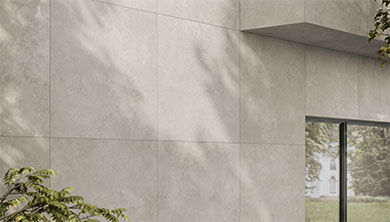


Fragma
- 6 Colors
- 4 Sizes
- 1 Surfaces
The bathroom is a space where aesthetics and functionality must coexist: ceramic and porcelain stoneware tiles allow you to design moisture-resistant floors and wall coverings, available in a wide range of finishes, colors, and sizes.
Ceramic and porcelain stoneware tiles and wall coverings for the bathroom




The bathroom requires materials capable of withstanding frequent contact with water, humidity and regular cleaning operations, without compromising the aesthetic quality of the surfaces.
Porcelain stoneware meets these requirements thanks to its compact structure and low water absorption, features that make it particularly suitable for flooring and coverings in the areas most exposed to splashes, such as the shower and washbasin area.
The ceramic surface is hygienic and easy to maintain: regular cleaning, carried out with products suitable for the chosen finish, allows you to remove dirt and residues from daily use without requiring special treatments.
The choice between wall tiles and floor tiles must always consider the specific technical features: while some collections are designed exclusively for the wall, others allow the same aesthetic effect to be used on both surfaces
A contemporary bathroom with essential lines, a classic space with refined details or a nature-inspired room: the desired style is a starting point for choosing the colors, materials and finishes of the tiles.
Ragno collections interpret these atmospheres through surfaces inspired by different materials: wood-effect porcelain stoneware introduces the warmth of natural essences; stone effect enhances mineral textures and shades; marble effect offers veining and contrasts that bring elegance to the space.
The final result is also defined by the size, the finish and the combinations with sanitary ware, furniture and taps. The same shade can take on a very different character if used on a large matte slab or on a small glossy covering.
The modern bathroom favors a balanced relationship between surfaces, volumes and details, using materials able to give character to the space without necessarily resorting to elaborate decorations.
Among the Ragno collections, Incanto reinterprets the elegance of natural marble through porcelain stoneware slabs also available in 120x278 cm size. The Glossy and Matt finishes allow for different results: glossy surfaces enhance reflections and the veining design, while matte ones provide a more discreet look. Mosaics and decors further expand the possibilities for customization.
For those who prefer a more textured look, Solida offers a concrete effect reminiscent of terracotta through colors and surface variations. The 3D Ink technology enhances material details, and the availability of sizes up to 160x160 cm allows you to design floors and coverings with minimal grout lines.
A modern bathroom can also be interpreted through wood. The Ligno collection is inspired by the brightness of Nordic landscapes, with subtle veining and natural shades. An alternative is Realstone_Rapolano, which interprets the look of stone through textured surfaces and natural shades. The collection can be matched with Rapolano Wall coverings, with structures and decors introducing reliefs and geometries on the walls.
Read also: Ideas and suggestions for tiling a modern bathroom
In a classic bathroom, marble veining, bright surfaces and decorative details help create a refined atmosphere, where traditional elements can coexist with modern design solutions.
Ivory , cream and beige shades go well with soft-lined sanitary ware and furniture, while more intense marbles introduce color contrasts that enhance the washbasin wall or the bathtub area.
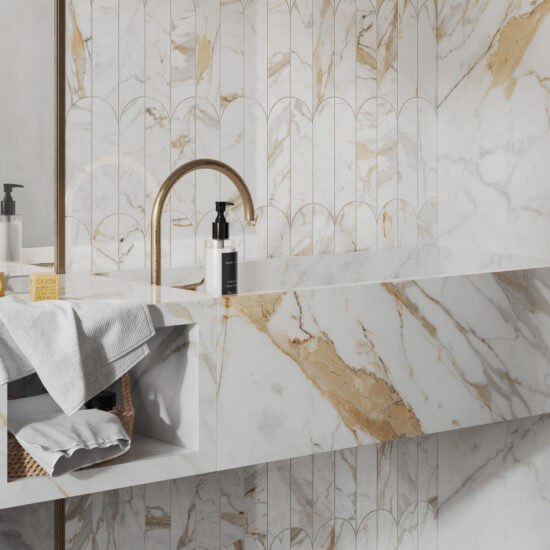
The Incanto collection offers many possibilities to interpret this aesthetic through marble-effect surfaces, mosaics and coordinated decors. The Ventaglio mosaic, for example, allows you to introduce a decorative motif reminiscent of traditional processing, particularly interesting for niches and portions of the covering.
Another possibility is to use small format tiles, which enhance the wall through the layout of grout lines and surface variations.
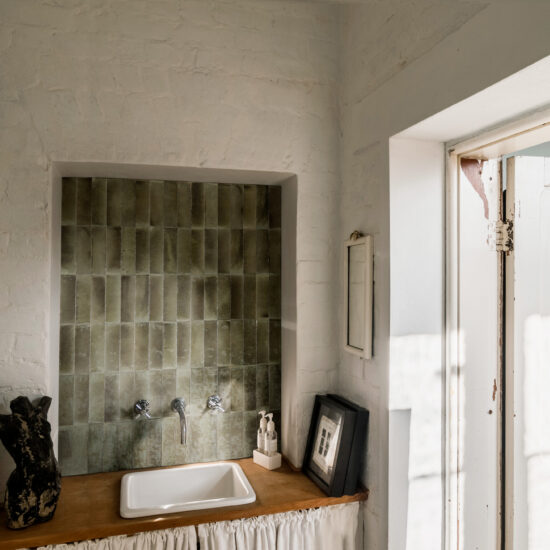
The Look and Mid collections reinterpret the charm of artisanal ceramics through glossy glazes, shades and rich details. The brick tiles can be installed in different patterns, creating decorative and bright coverings.
For those seeking a more scenic motif, Papers offers white-body coverings in the 60x180 cm format, with botanical and geometric decors in a wallpaper effect.
The elegance of a classic bathroom can therefore also arise from the balance between uniform surfaces and decorative details, without extending motifs and veining to the entire room.
Surfaces inspired by wood and stone are particularly suitable for those who want a bathroom with a warm, relaxing atmosphere, inspired by natural materials.
Among the Ragno collections, Realstone_Classica interprets stone through color variations and microtextures enhanced by 3D Ink technology. The White, Grey and Ivory shades, together with the available natural and structured finishes, make it possible to create floors and coverings with a sober, textured look.
Another interpretation of natural materials is offered by Realstone_Travertino, which reproduces the features of travertine through surfaces characterized by veining and layering. The Cross and Vein variants allow you to choose between different stone patterns, while the numerous sizes, including large slabs, favor continuity between the surfaces in the bathroom.
The collection coordinates with Travertino Wall, white-body covering 40x120 cm that recalls the shades of travertine through backgrounds, three-dimensional structures and decorative details.
To introduce the warmth of wood, Nodis offers porcelain stoneware surfaces with natural wood grain and Oak and Natural shades. The various sizes allow you to create parquet-inspired floors, which can be coordinated with stone-effect coverings and neutral colors.
The choice of tiles is not just about individual surfaces: floor, walls and shower area can be designed as parts of a whole, using coordinated materials or creating contrasts through finishes, sizes and textures.
One option is to maintain the same aesthetic effect on floor and walls, choosing similar shades to achieve visual continuity. This solution is especially suited to spaces where the aim is to highlight the material while avoiding too many color variations.
The Ragno collections for floor and wall allow you to explore coordinated surfaces, checking the intended use of each reference.
Realstone_Tirrenica interprets stone through mineral shades and natural-looking surfaces. The White, Beige, Grey and Taupe shades allow you to design coordinated spaces, while the Tratto mosaic introduces a graphic variation suitable for highlighting details and portions of the covering.
An alternative solution is to pair a neutral floor with a decorative wall covering, choosing a color or texture that becomes the protagonist of a specific area.
The Mid and Look collections, for example, allow you to emphasize the walls through small glossy formats and color variations, creating a contrast with stone, concrete or wood-effect floors.
Ceramic mosaic also offers interesting possibilities for the shower and niches. The small tiles introduce a finer pattern, which can be used to highlight a surface or to echo the color of the main covering.
In the shower area, however, it is necessary to distinguish between the needs of vertical surfaces and those of the floor. For the shower floor, it is essential to choose tiles with technical characteristics suited to water exposure, considering the finish and slip resistance according to expected use.
Another aspect to consider is the choice between glossy and matte finishes. Glossy tiles enhance light through reflections and bring out colors and veining, making them particularly interesting on walls. Matte surfaces, on the other hand, offer a softer, more natural look, especially for stone, wood and concrete effects.
Read also: How to choose between glossy and matte finishes for the bathroom
The color of the tiles helps to define the atmosphere of the bathroom and the way light, volumes and materials are perceived: the choice can focus on a uniform palette or highlight an area with contrasting shades.
White tiles are a versatile solution to create bright spaces and highlight the lines of the furniture. White surfaces can be combined with natural materials, metallic details or colored coverings, maintaining a minimal look.
Beige shades and ivory bring a warmer component, especially suited to spaces inspired by stone and wood. These are shades ideal for covering large surfaces, creating a welcoming atmosphere while preserving brightness.
Grey tones allow for a contemporary take on the bathroom, from light and delicate hues to anthracite shades. Grey can be used as a neutral base or combined with warmer-looking materials to balance the overall effect.
To bring in a more evident chromatic component, azure shades recall the freshness of water and are ideal for light atmospheres. Blue, in deeper hues, is perfect to highlight an accent wall, the washbasin area or the shower covering.
Choosing bathroom tiles involves some practical considerations, especially when working on an existing room or when different surfaces with various functions need to be coordinated. Here are the answers to the most common questions about installation, formats and maintenance.
Laying new tiles over existing coverings can be possible, but requires a preliminary assessment of the surface condition.
It is necessary to check that the substrate is stable, intact and sufficiently flat, also considering the added thickness and any interference with doors, sanitary ware and other bathroom elements.
Before proceeding, it is important to consult with a designer or qualified installer, who can assess the condition of the substrate and identify the most suitable solution.
In a small bathroom, the tile format must be assessed together with brightness, colors and the arrangement of elements.
Large formats tiles, for example, reduce the number of grout lines, creating visually more continuous surfaces. Using light shades and coordinating floor and wall coverings can help make the space feel more open.
Small formats are also an interesting option, especially when you want to highlight a wall, a niche or the shower area with geometries and decorative details.
There is therefore no universally best format: the choice depends on the desired effect and the actual proportions of the space.
Read also: Tiles for small bathrooms: guide to the ideal choice
Porcelain stoneware is easy to maintain thanks to its compactness and low water absorption, features that are especially useful in spaces exposed to humidity.
For regular cleaning it is important to use detergents suitable for the specific finish, regularly removing soap residues, water marks and limescale deposits.
Grout lines require specific attention, especially in the shower area, where humidity can encourage dirt build-up. It is advisable to use products compatible with the grout material and avoid overly aggressive substances.
Proper bathroom ventilation and drying of the most water-exposed surfaces also help keep them in good condition over time.
