


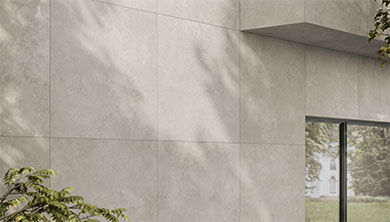


Mélange
- 9 Colors
- 1 Sizes
- 1 Surfaces
The bedroom is the space dedicated to rest, where materials, colors, and finishes help create a welcoming atmosphere. Discover Ragno collections of flooring and wall coverings in porcelain stoneware and ceramic, from wood-effect planks to large marble-effect slabs for the headboard wall.
Porcelain stoneware and ceramic tiles for the bedroom




Porcelain stoneware is an interesting solution for those who want a bedroom with a warm and refined look, choosing a resistant and easy-to-maintain floor.
Thanks to ceramic production technologies, porcelain stoneware realistically reproduces wood grain, stone shades, and marble patterns, offering great freedom in defining the style of the sleeping area.
Compared to natural wood flooring, it offers greater wear resistance and does not require periodic treatments such as sanding or restoration of surface finishes. The compactness of the material also makes daily maintenance practical.
The availability of different sizes and thicknesses also allows for the design of continuous flooring between bedroom, hallway, and other spaces, avoiding material changes between rooms.
The Ragno collections for floor and wall coverings allow these combinations, choosing surfaces and finishes consistent with the different intended uses.
The floor greatly contributes to the atmosphere of the bedroom, as it forms the visual base on which furniture, fabrics, and accessories are placed.
The choice of aesthetic effect allows the design to be directed towards very different interpretations: wood evokes a familiar and welcoming space, concrete matches more essential interiors, while stone enhances a natural and bright palette.
The wood effect porcelain stoneware is particularly suitable for those who want to recall the character of wood flooring. The elongated planks emphasize the direction of the room and can be laid in regular or more elaborate patterns, such as chevron, giving the floor a recognizable design.
Among the Ragno collections, Nodis interprets wood grain through a surface rich in chromatic variations. The Oak and Natural shades allow the creation of floors with an authentic look, suitable for rooms furnished with natural materials and fabrics in warm hues.
For a bedroom with a Nordic aesthetic, Ligno offers a wood effect with light and continuous grain, enhanced by 3D Ink technology. The palette includes Ivory, Beige, and Oak shades, available in 20x120 and 22.5x180 cm planks. The elongated proportions help create a relaxed visual rhythm, while the natural colors easily match light furniture and essential finishes.
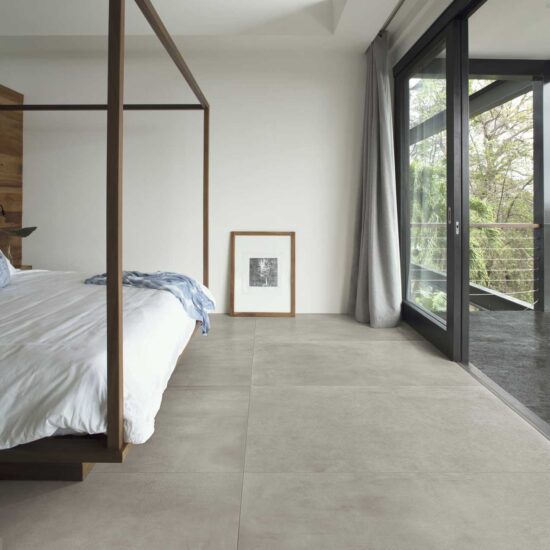
Those who prefer a more contemporary language can choose concrete effect porcelain stoneware, selecting soft shades and textured surfaces that complement the furnishings without necessarily becoming protagonists.
The Solida collection reinterprets concrete through an aesthetic that retains a reference to terracotta colors. The Ivory and Rope shades, together with sizes up to 160x160 cm, allow the creation of large, visually neat floors.
Another design direction is represented by stone effect porcelain stoneware, particularly interesting for bedrooms where you want to emphasize sand, ivory, and beige tones.
The Realstone_Rapolano collection is inspired by Tuscan travertine and reproduces its veins through surfaces enriched by 3D Ink technology. The Ivory, Beige, and Melange Walnut shades make it possible to choose between a brighter color base and warm, intense nuances, enhancing the naturalness of the material.
The choice between wood effect planks, concrete surfaces, and light stones thus depends on the character you want to give the room: a more elaborate floor can become a distinctive element of the decor, while a uniform surface leaves more space for fabrics, furniture, and decorations.
Read also: 4 ideas for wood flooring in the bedroom
In the sleeping area, ceramic can go beyond the function of flooring and become a decorative element able to define the style of the room.
Walls covered in porcelain stoneware or ceramic are an alternative to paint and wallpaper, with the advantage of offering durable, easy-to-clean surfaces available in numerous aesthetic effects.
It's not necessary to cover the entire room: often it's enough to work on a single wall to change the perception of the space. The surface behind the headboard, for example, can become the focal point of the space, while a niche or a portion of wall can be enhanced through graphic patterns, reliefs, and color variations.
The result also depends on the lighting. Bedside lamps, wall lights, and indirect lights can highlight marble veins or three-dimensional structures, creating different effects between day and evening.
The wall behind the bed is one of the most interesting surfaces to enhance with ceramic covering, as it allows for the introduction of a distinctive element without changing the whole space.
One solution is to use large marble-effect slabs, which highlight the veins through larger surfaces and a reduced number of joints. The result is a scenographic wall, which can accompany an upholstered headboard or become itself the main decorative element of the room.
Among the Ragno collections, Incanto offers surfaces in marble effect porcelain stoneware also available in 120x278 cm size. The variants inspired by light marbles and onyxes, such as Onyx Ivory and Statuario Venato, allow you to create elegant coverings, with bright backgrounds and veins crossing the surface.
For those who prefer a less glossy effect, surfaces inspired by stone and travertine allow for a more natural atmosphere. Wall coverings coordinated with stone effect floors, for example, can pick up the same tones in a different finish, keeping a connection between floor and wall.
Another possibility is to work with three-dimensional reliefs, choosing structures that create soft shadows and enhance the light coming from lamps at the sides of the bed.
The Modus collection interprets contemporary boiserie with white body wall coverings in wood effect. The 3D Bamboo structure, available in Oak and Light Oak shades, features grooves that can be arranged vertically or horizontally.
Also Richmond allows you to introduce three-dimensional textures and tone-on-tone variations, through stone effect surfaces designed for rooms with a sober and refined character. The decorative structures can be used to differentiate the headboard area, keeping a color palette coordinated with the rest of the room.
Read also: The porcelain stoneware headboard
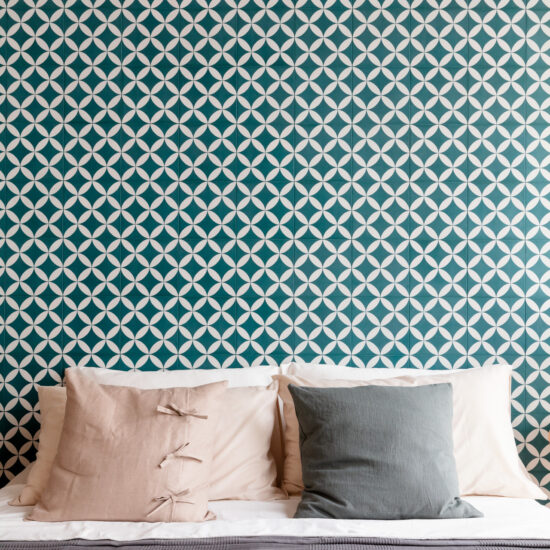
A decorative wall can also be designed without using large slabs. Botanical patterns, geometries, and tiles with an artisanal look allow you to characterize the room through finer details, creating original compositions.
Wall coverings that recall the look of wallpaper, for example, can introduce floral and plant designs on the headboard wall, creating a space with a romantic or contemporary character depending on the chosen palette.
For those who prefer a wall covering marked by the geometry of the tiles, small formats offer numerous installation possibilities. Elongated bricks, square modules, and glazed surfaces can create a decorative pattern that takes shape through the alternation of joints and shades.
Among the Ragno collections, Mid reinterprets the charm of artisan productions through glossy porcelain stoneware tiles. The surface features glass grit, subtle color variations, and irregular edges, which help make each composition more dynamic.
A more delicate interpretation of the small format is offered by Wish, a porcelain stoneware collection in 5.3x30 cm size. The semimatt finish and irregular edges recall artisanal ceramic work, while the palette includes shades such as Petal, Light Blue, and Green, which can be used alone or combined with neutral surfaces.
The bricks can be arranged vertically to emphasize the height of the wall or horizontally to follow the development of the headboard. Even staggered or herringbone patterns allow for different graphic effects, enhancing the format without necessarily introducing additional decorations.
Read also: Floral wallpaper effect walls: nature enters the home
Yes, porcelain stoneware is compatible with underfloor heating systems and is also an interesting solution for the sleeping area.
The good thermal conductivity of the material facilitates the transmission of heat from the radiant system to the room, helping to maintain a comfortable temperature during the colder months.
Wood effect surfaces also allow you to achieve the warm look of wood flooring, combined with the technical features of ceramic.
For correct installation, it's important to define together with the designer and installer the tile size, installation materials, and substrate construction methods, taking into account the requirements for the radiant system.
The size of the tiles can influence the perception of space, but there is no universally best format for small bedrooms.
Large sizes reduce the number of joints, creating visually more continuous flooring. Light shades and low-contrast surfaces can also help maintain a bright atmosphere.
For those who prefer the wood effect, elongated planks allow you to work on the laying direction. Laying them along the main axis of the room can emphasize its depth, while a transverse or chevron pattern introduces a different design.
The choice must still take into account the position of the bed, the proportions of the space, and the cuts needed along the walls. A designer can help identify the most suitable format and laying scheme for the characteristics of the room.
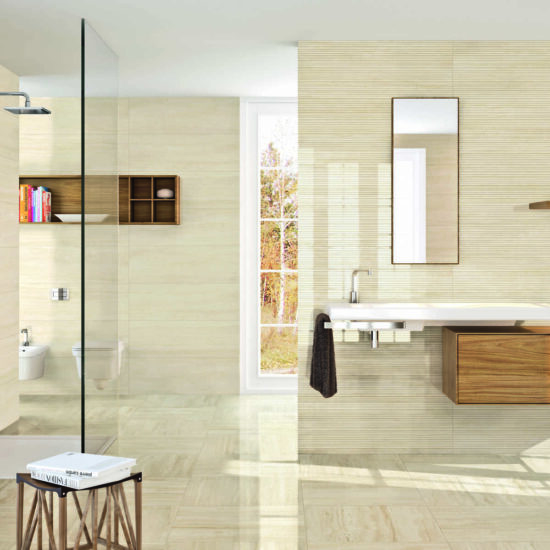
Using the same porcelain stoneware in the bedroom, hallway, and bathroom allows you to create visual continuity between the spaces of the sleeping area, avoiding color breaks between rooms.
Many Ragno collections include sizes and finishes designed for floors and wall coverings, allowing you to continue the same aesthetic effect on different surfaces.
A wood effect floor, for example, can continue from the bedroom to the hallway and the bathroom, maintaining a uniform material identity.
